E-commerce is no longer just about putting products online and driving traffic. Today's consumers expect faster decisions, relevant recommendations, and experiences that feel almost intuitive. This shift is giving rise to Agentic commerce.
What is Agentic Commerce?
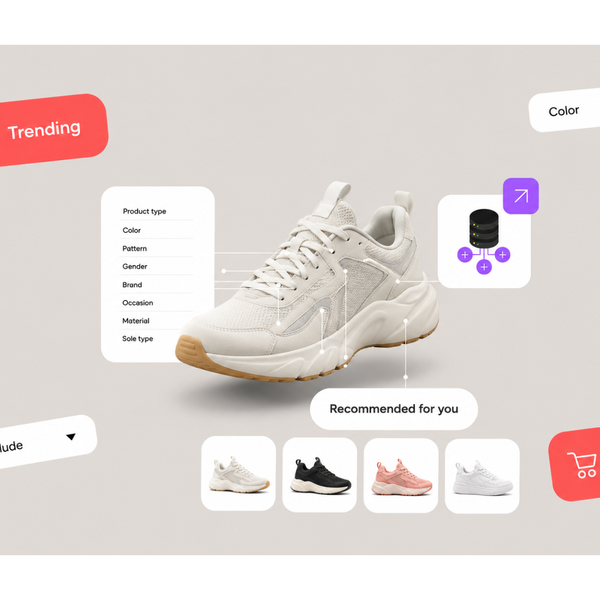
Agentic commerce refers to e-commerce experiences where AI systems act like intelligent agents, actively guiding users through discovery, evaluation, and purchase. Instead of reacting to clicks on a static storefront, these systems understand, predict, and personalize in real time.
Definition
Agentic commerce is when AI takes an active role in the shopping journey, understanding what a customer wants before they fully articulate it, and shaping the experience around that intent.
In traditional e-commerce, the shopper does all the work. They search, filter, compare, and decide. In agentic commerce, the store does much of that thinking on their behalf, adapting product visibility, recommendations, and messaging in response to live behavioural signals.
Platforms like Helium are already enabling this shift by helping D2C brands build adaptive, AI-driven shopping experiences that respond to intent rather than waiting passively for a shopper to find their way.
74%
Of shoppers frustrated when content is not personalised to them
3x
Higher conversion rates for AI-personalized shopping journeys
26%
Of ecommerce revenue driven by AI-powered recommendations
Why Traditional Ecommerce Journeys Are Breaking
38%
of shoppers abandon a site when the product layout or content feels irrelevant to them.
— Adobe / Sweor UX Research
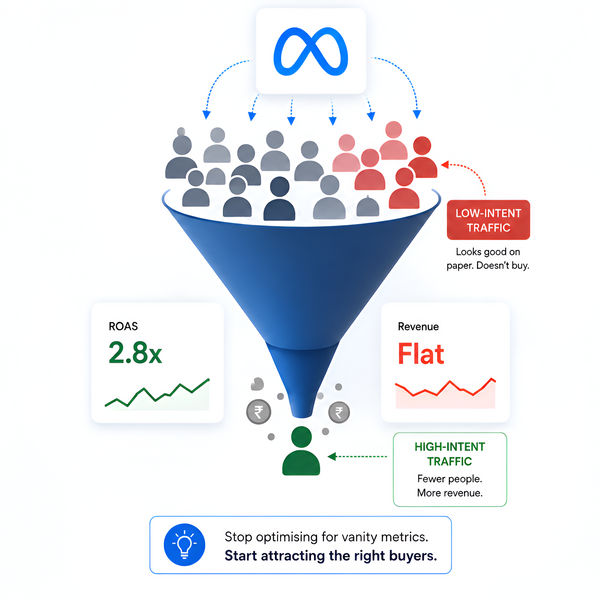
Most e-commerce journeys today are still static. Every visitor sees the same homepage, the same product listings, and the same offers, regardless of where they came from, what they have bought before, or what they are actually looking for.
This creates compounding friction across the funnel. Too many irrelevant choices lead to decision fatigue. Mismatched products cause drop offs before the product page even loads. Long discovery cycles drag down conversion for everyone.
Decision fatigue
Too many low fit products shown too early, shoppers stall and leave without progressing.
Rising acquisition costs
CAC keeps climbing while traffic quality stagnates. Brands can no longer rely on volume alone.
Shrinking attention spans
Shoppers give new storefronts seconds to prove relevance, irrelevance is invisible and instant.
"Most D2C brands treat collection pages like warehouse shelves, static rows, sorted once, never optimised. That is not a shopping experience. It is an obstacle course."
That is where AI led personalization platforms like Helium step in, turning static storefronts into adaptive ones that respond to shopper intent rather than generic defaults.
How Agentic Commerce Works
At its core, agentic commerce is powered by a continuous loop of understanding, decision-making, and optimization. Each stage feeds the next, creating a system that improves with every session it processes.
Understanding visitor intent
Every session generates behavioral signals that reveal intent before a shopper has said a word. AI reads these signals in real time and begins building a picture of what this particular visitor actually wants.
AI-powered decision making
Based on the live intent profile, the system makes merchandising decisions in real time, which products to surface first, which recommendations to prioritize, and which bundles or offers are most likely to resonate with this specific visitor right now.
Real-time store adaptation
The storefront changes dynamically in response. Homepages personalize to match visitor context. Product rankings shift. Contextual nudges, relevant to this shopper's intent, appear at the right moment rather than firing generically for everyone.
Continuous learning and refinement
With every interaction, the system improves its predictions, refines its recommendations, and builds a sharper model of what drives conversion for each shopper segment. This is where compounding gains happen. This is where platforms like Helium combine session intelligence, AI search, and dynamic merchandising into one unified layer.

Real-World Examples of Agentic Commerce
You're already experiencing agentic systems, even if you don't call them that. The intelligence that powers Netflix's content feed, Spotify's playlist curation, and Amazon's recommendation engine is the same class of AI now moving into D2C ecommerce.
Amazon
Behavioural product recommendations
Surfaces products based on browsing history, purchase patterns, and session context, adapting for each user across every visit.
Spotify
Taste-based playlist curation
Learns listening preferences over time and curates personalized content that improves the more you use it.
Netflix
Personalised content feeds
Every user sees a completely different home screen, shaped by viewing history, time of day, and engagement signals.
D2C Ecommerce
Intent-adaptive storefronts
Dynamic product rankings, personalised landing pages, AI search, and smart bundles, now accessible to growing brands, not just tech giants.
What was once limited to companies with hundreds of engineers is now becoming accessible to growing D2C brands through platforms built specifically for this purpose. The intelligence gap is closing.
Why Agentic Commerce Matters for D2C Brands
5x
CAC reduction seen by D2C brands using intent-based personalization to improve conversion from existing traffic rather than buying more of it.
— Helium customer data
D2C brands today face one defining challenge: getting traffic is expensive, and converting it is harder than ever. Agentic commerce directly addresses this by improving the quality of every session rather than simply increasing the quantity.
Higher conversion rates
When products match intent from the first scroll, shoppers progress to purchase faster. There's less friction to overcome, fewer unanswered questions, and less reason to leave.
Increased average order value
Smart bundles and contextual cross-sells presented at the right moment increase basket size without feeling pushy or misaligned.
Stronger retention
Returning customers who experience recognition and relevance on every visit build a connection with the brand that transactional relationships can't replicate.
More revenue from existing traffic
Instead of acquiring more users to grow revenue, brands can extract significantly more value from the visitors they already have.
The Future of Ecommerce is Autonomous
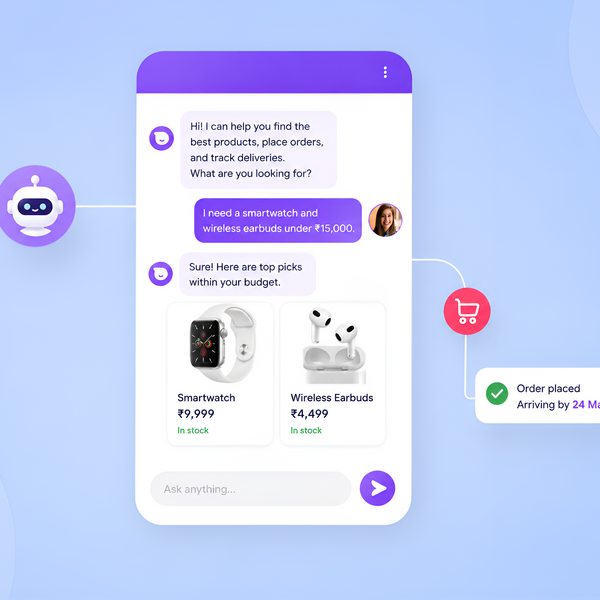
We're entering a phase where the distinction between browsing and buying starts to dissolve. Instead of navigating a store, shoppers will express intent and let intelligent systems do the rest. The storefront becomes a conversation rather than a catalog.
01
Conversational commerce
Shoppers express what they want in natural language and AI surfaces the right products, answers questions, and guides purchase without friction.
02
Autonomous agents
AI agents assist in real-time shopping decisions, comparing options, applying logic, and recommending outcomes tailored to each shopper's priorities.
03
Instant storefronts
Every visitor sees a version of your store built specifically for them, from the first fold to checkout, without any manual configuration.
04
Effortless discovery
Products find shoppers rather than shoppers hunting for products. The intelligence layer closes the gap between intent and purchase instantly.
"The brands that win won't be the ones with the most products. They'll be the ones with the best intelligence layer — the ones whose stores know what a shopper wants before the shopper fully knows themselves."
The competitive advantage will not come from catalog size or ad spend. It will come from how well a brand's system understands its shoppers and adapts in real time.
How Helium Enables Agentic Commerce
Helium is built specifically to give D2C brands the intelligence layer that agentic commerce requires. Rather than optimizing isolated elements, it orchestrates the entire shopper journey from the first pageview to the moment of purchase.
Real-time session signals
Captures scroll depth, categories explored, dwell time, device, referral source, and behavioural pace, building a live intent profile for every visitor as they browse.
Intent-based collection reordering
Reorders product collections in real time based on who the shopper is and what signals they are showing, no developer required and no manual rules to maintain.
Dynamic landing page personalization
First-fold content adapts to each session, matching ad source, past behavior, or visitor type so the experience feels immediately relevant from the first scroll.
AI-powered search and discovery
Search results adapt to context and intent, surfacing the most relevant products rather than returning static keyword matches that ignore session behaviour.
High-intent audience syndication
Pushes high intent audiences identified on site back to ad platforms, so retargeting spend is focused on shoppers who were genuinely close to converting.
Brands using Helium have seen measurable improvements in converted sessions, order values, and retention, driven not by more traffic, but by a more intelligent response to the traffic they already have. See how Sudathi achieved a 25% conversion uplift and how Akiso improved conversion rates by 73% using Helium's personalization layer.
Final Thoughts
Agentic commerce is not a future concept. It is already reshaping how e-commerce works for the brands willing to move beyond static storefronts. The question for D2C brands is not whether this shift is coming, it is whether they will be part of the first wave or the second.
See agentic commerce in action on your store
Helium adapts your storefront to every shopper in real time, from intent detection to dynamic product ranking to personalised landing pages. Book a demo and see what your store looks like when it actually thinks.